
A turquoise ring can change the character of a familiar outfit without requiring a new wardrobe. Blue against denim, a heart-shaped stone beside a plain band, or a five-ring bridal stack each creates a different effect. That flexibility is a more useful reason to choose a ring than a claim that every turquoise design is fashionable or suitable for everyone.
This guide focuses on appearance and arrangement: the shape of the ring, how much space it occupies, and how it relates to the jewelry you already wear. Start with the turquoise rings collection if you want to compare the examples with other shapes. Check individual materials and sizes before choosing; a shared color does not mean two rings have the same construction.
Start with the shape you want to notice
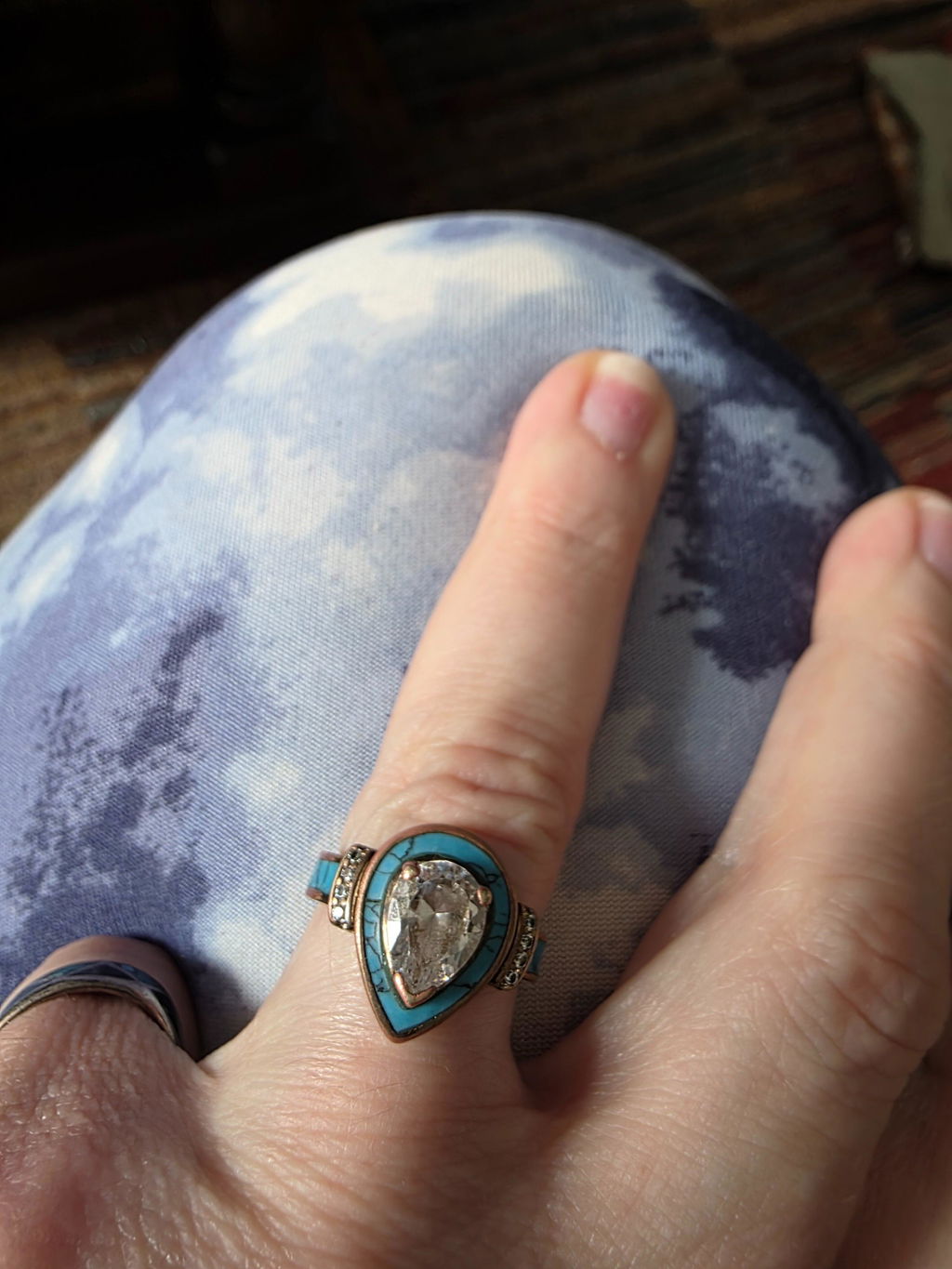
A defined heart or geometric outline
A heart or square gives your eye a clear boundary to follow. If the outline is what attracts you, leave a little visual space around it rather than crowding both sides with equally detailed rings. Look beyond the front photograph: the shoulders and band can make a small center look substantial, particularly when they carry deep-looking floral patterns or a dark contrasting finish.
Our heart-shaped turquoise ring with flower engraving is one example. It combines a copper base, a silver-black finish and a 10mm band. Those details make it a different purchase from a narrow sterling silver ring, even if both show a similar blue stone.
An oval with an open, flowing outline
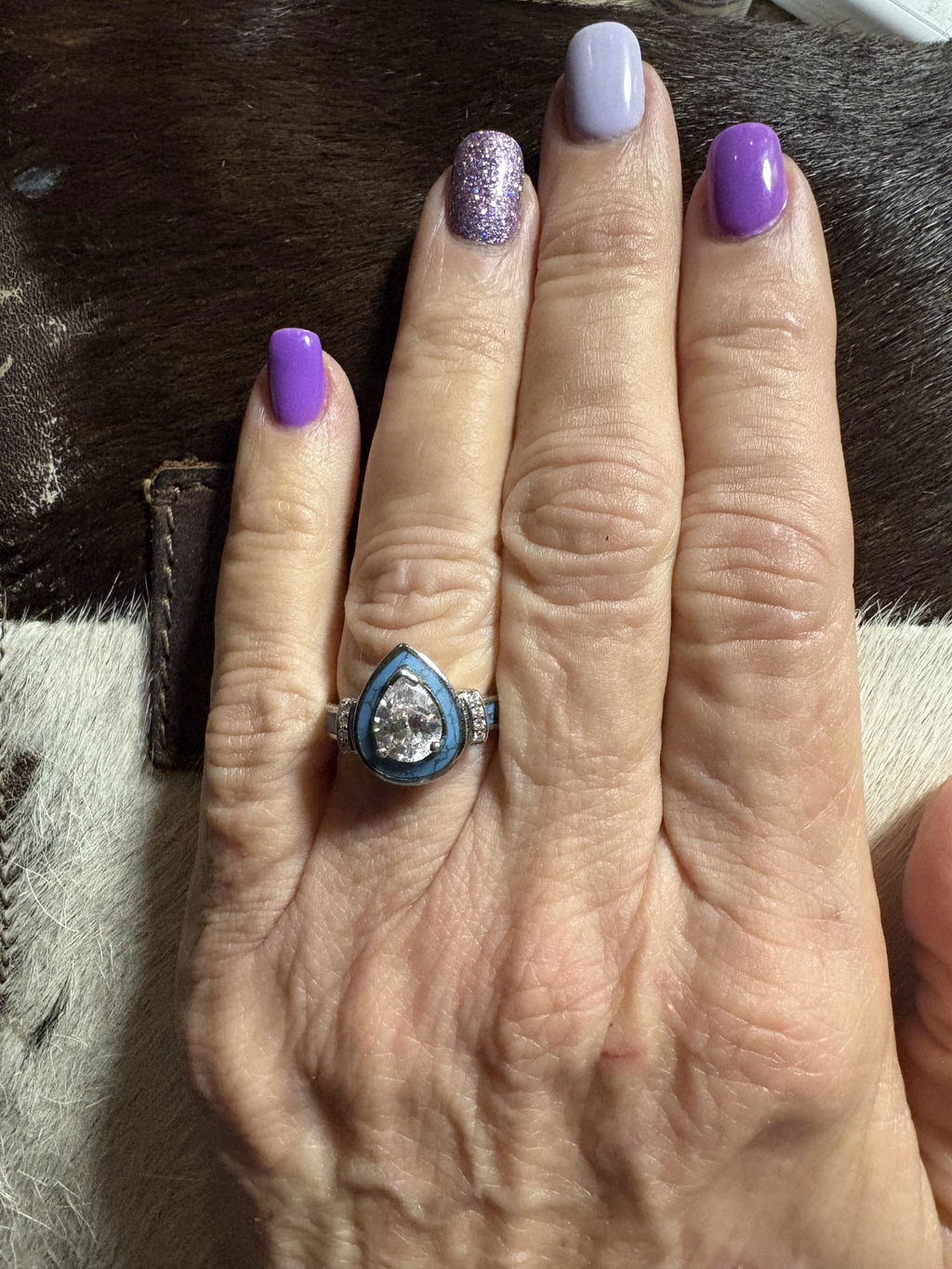
An oval creates a longer line, while feather-shaped details can extend the design beyond the stone itself. Compare the entire outline rather than only the stone. A second clear accent changes the balance again: decide whether you want the blue area to lead the arrangement or prefer the contrast between two stones.
The sterling silver turquoise feather ring combines an oval stone with a round crystal accent. It is a single statement ring, so its layered appearance should not be confused with a set of separate bands.
Choose between one focal ring and a coordinated stack
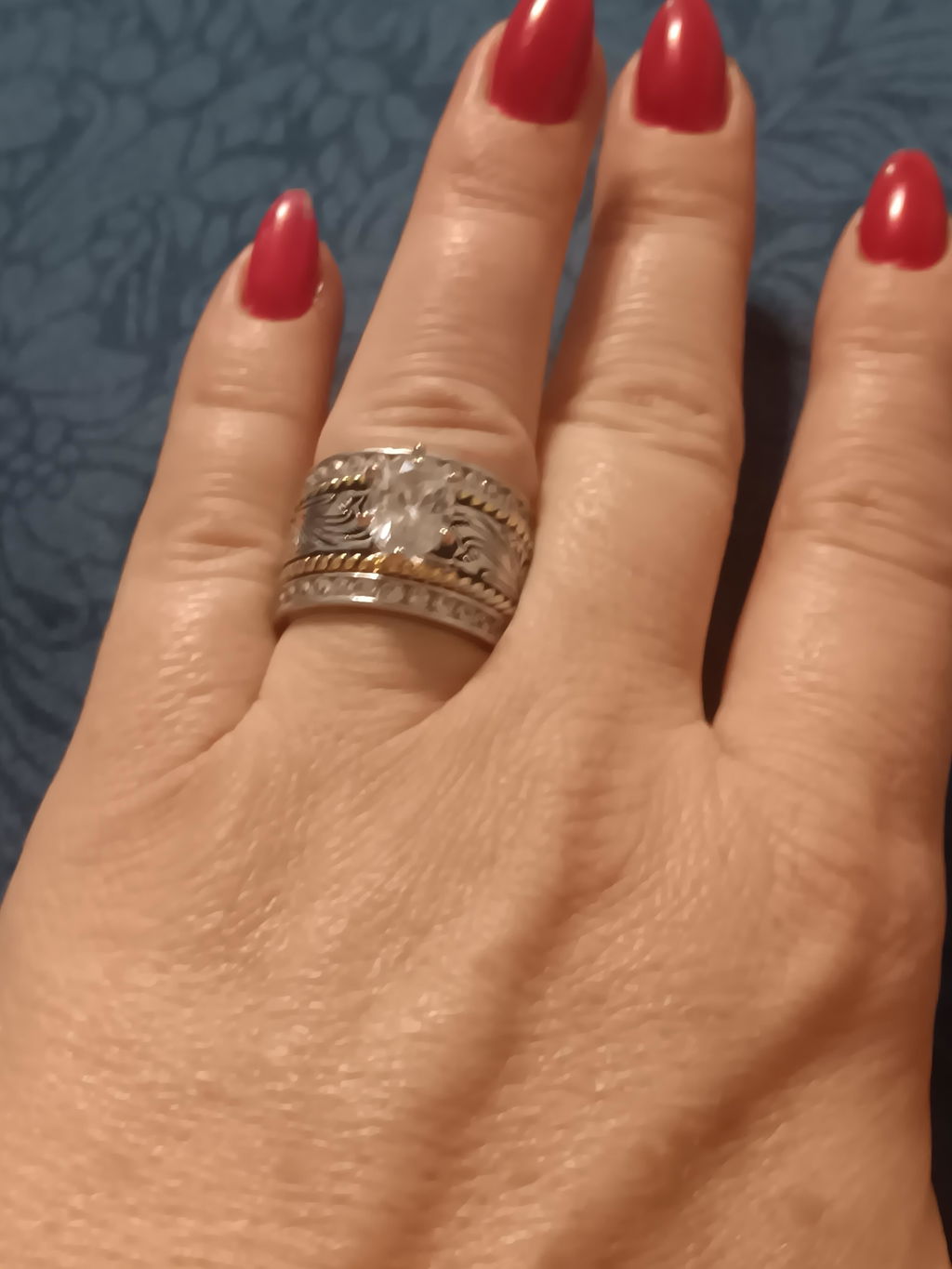
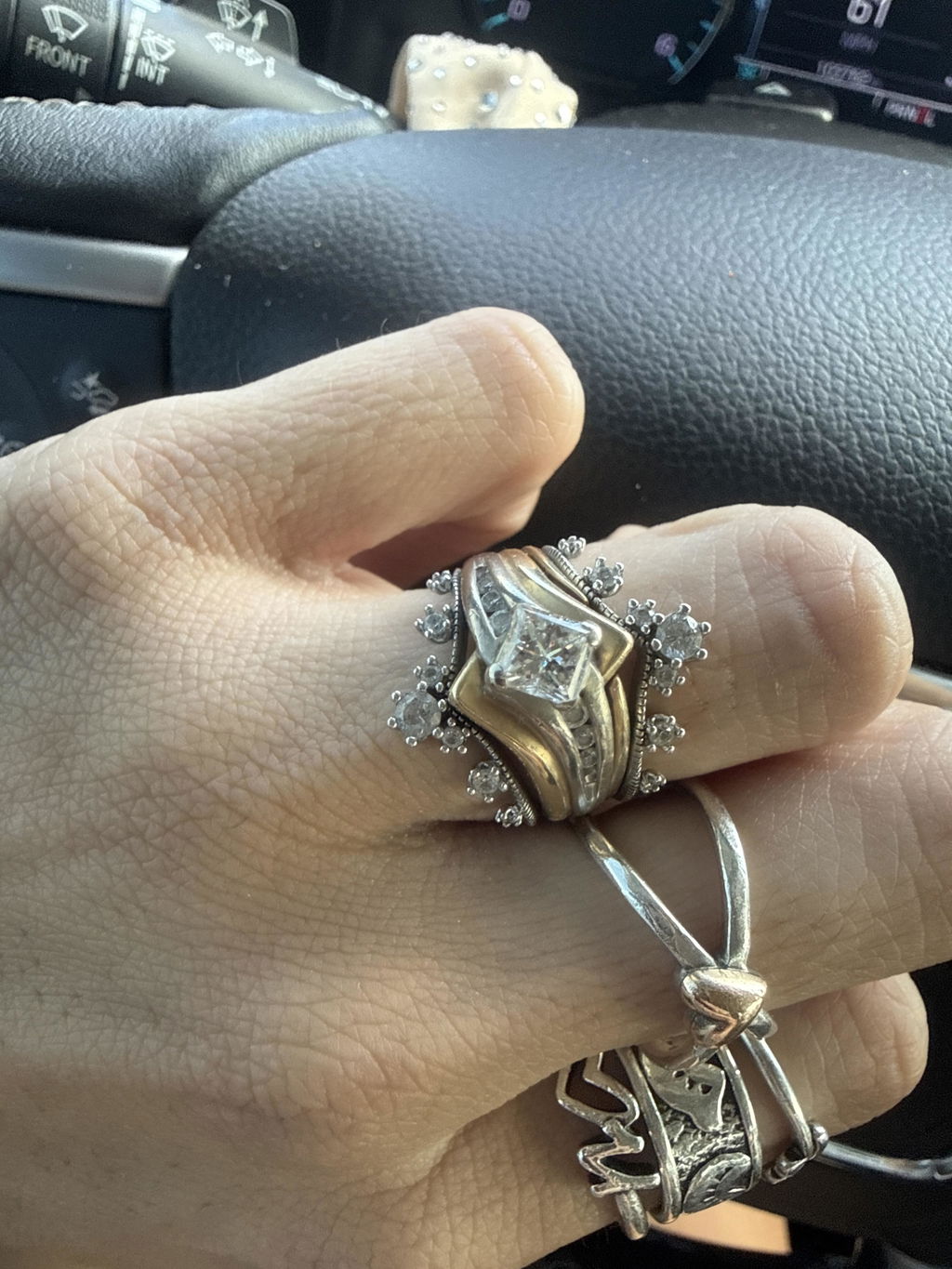
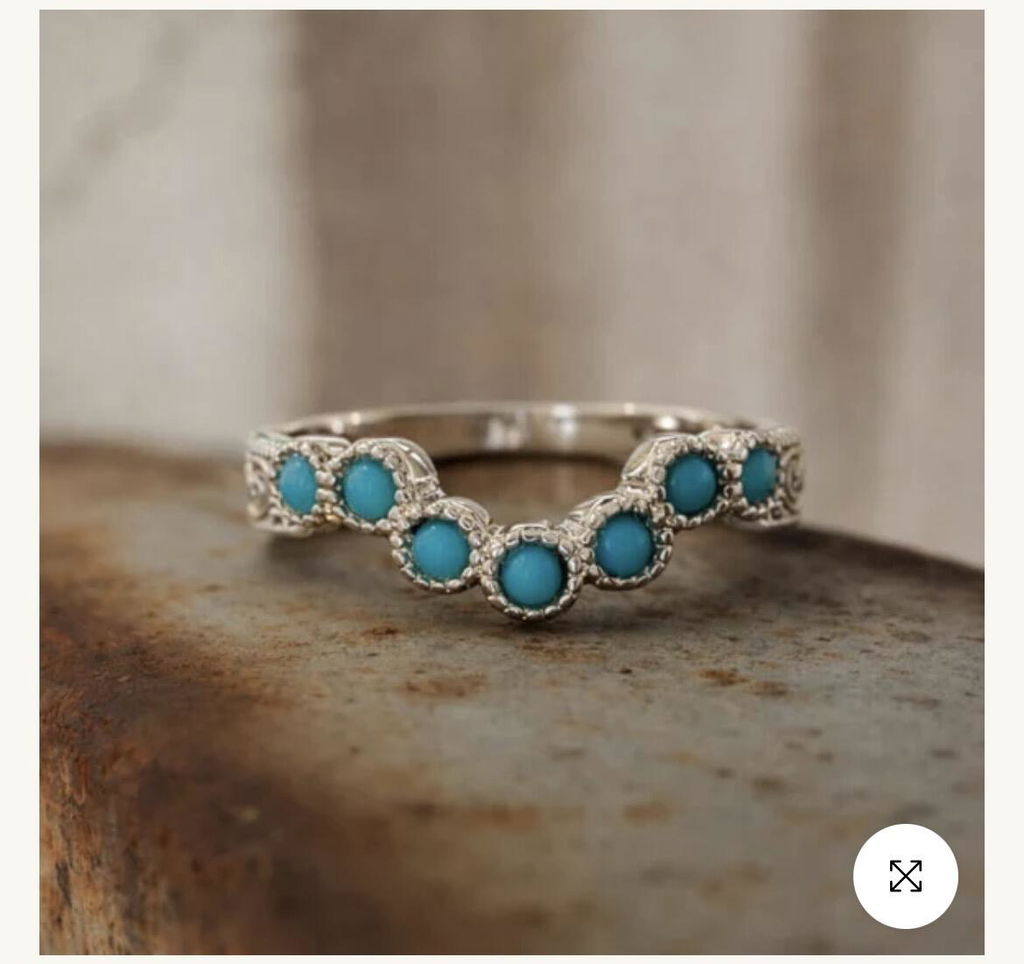
A single ring gives you one outline to coordinate with a watch, bracelet or other rings. A stack lets several outlines work together. Neither approach is inherently more dressy: a large single setting can look bolder than several slim bands, while floral engraving can make an otherwise compact stack feel visually busy.
For a set, check the number of rings included and study how they sit together. Product photographs may show several angles of the same arrangement; they do not necessarily show additional pieces. Also compare the complete width across the finger, not just the width of the center ring. If the full dimensions are not listed, ask for them before buying.
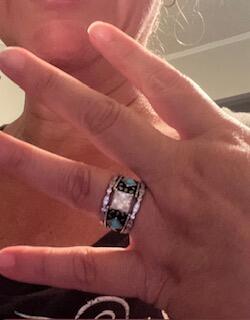
The five-piece turquoise and moissanite ring set offers a coordinated sterling silver option with floral details. Choose it because you want that particular multi-ring composition, rather than expecting it to feel identical to a single narrow band.
Use finish and detail to connect the look
You do not need every piece of jewelry to match exactly. Instead, repeat one feature: a curved line, a floral pattern, a cool silver-colored finish or a warm accent. If your ring has both silver and rose-gold-tone details, either color can provide a starting point for the rest of the arrangement.
Keep metal descriptions separate from color descriptions. Silver-colored does not by itself mean sterling silver, and rose-gold-tone does not establish solid gold content. Read the base metal and finish together. This matters when comparing photographs, since similar lighting can make different materials appear close in color.
Three useful outfit checks
- With denim and a plain top: Try one detailed ring as the focus. Before adding more jewelry, check whether the turquoise and engraving already provide enough contrast for the look you want.
- With a patterned dress: Repeat one color or shape from the fabric. A simpler arrangement of rings can give the pattern more room; a coordinated stack can work when the rest of the accessories are restrained.
- For a bridal or occasion outfit: Compare the ring arrangement with bracelets, sleeves and any gloves you plan to wear. Leave time to check fit and movement with the complete set, rather than judging only a close-up photograph.
These are starting points for styling, not rules about who can wear turquoise. A personal favorite can work across more than one outfit. Photographing two arrangements in similar light can make differences in scale and spacing easier to compare.
Check the facts behind the photograph
A product image helps you compare shape and color, but it cannot confirm a stone's origin or treatment. If authenticity is central to your decision, use our guide to identifying real turquoise jewelry for questions to ask before purchase. Do not infer a mine name, maker's identity or cultural provenance from a Western-style motif.
Care should also suit the materials. GIA advises against steam and ultrasonic cleaning for turquoise and notes that heat and chemicals can affect it. See GIA's turquoise care guidance and our turquoise jewelry care guide before selecting a cleaning method.
A short checklist before you choose
- Identify the shape you want to emphasize: heart, oval, band or multi-ring stack.
- Confirm how many rings are included and which stones are named in the specifications.
- Read base metal and finish separately.
- Compare band width, setting profile and available size options with a ring you know.
- Check whether the design works with the clothes and jewelry you actually wear.
A ring that suits those choices has a clearer place in your wardrobe than one selected only because it is described as a trend. Let the details, fit and useful comparisons guide the decision.
Updated by the Retro Turquoise Editorial Team.