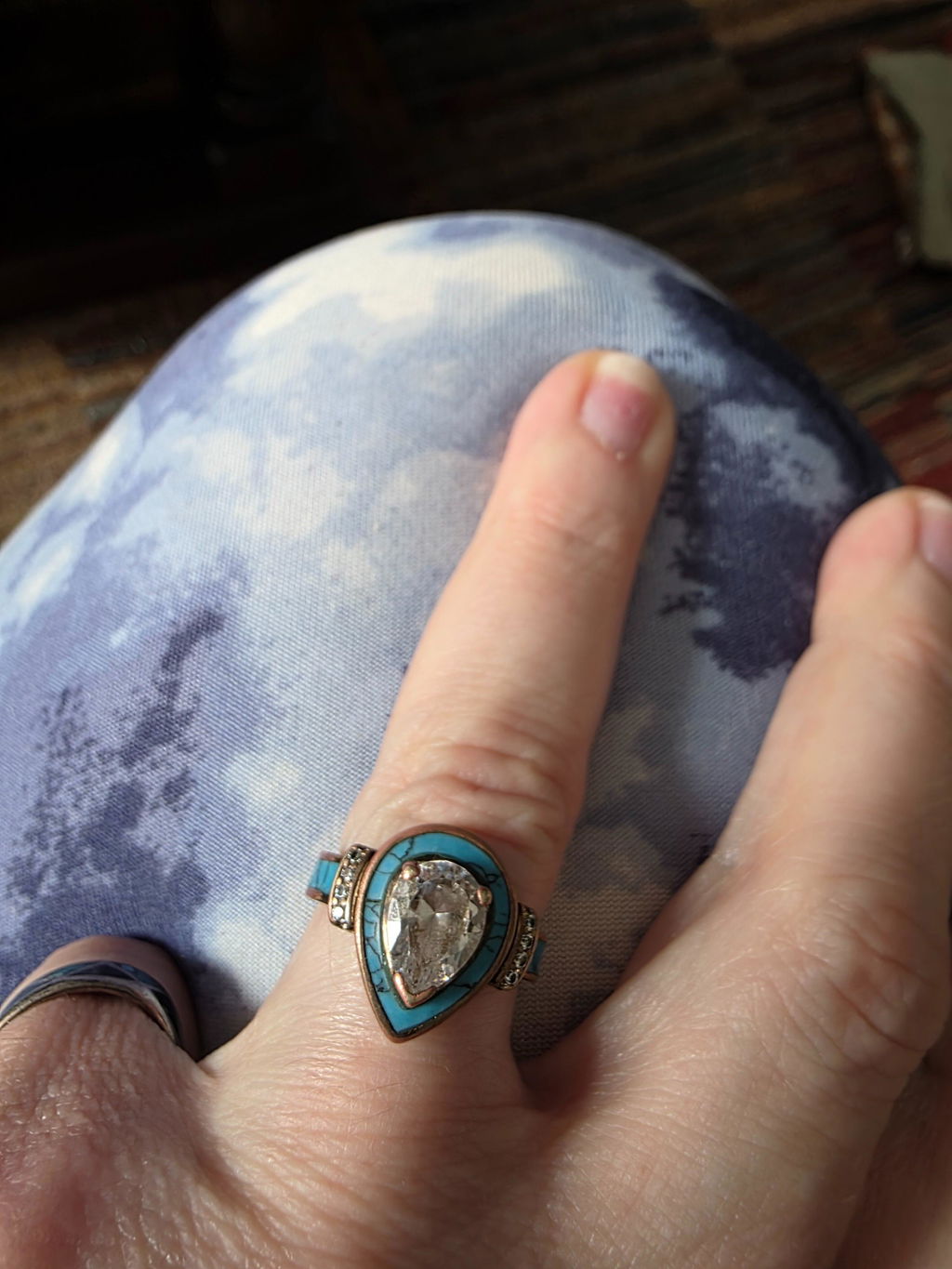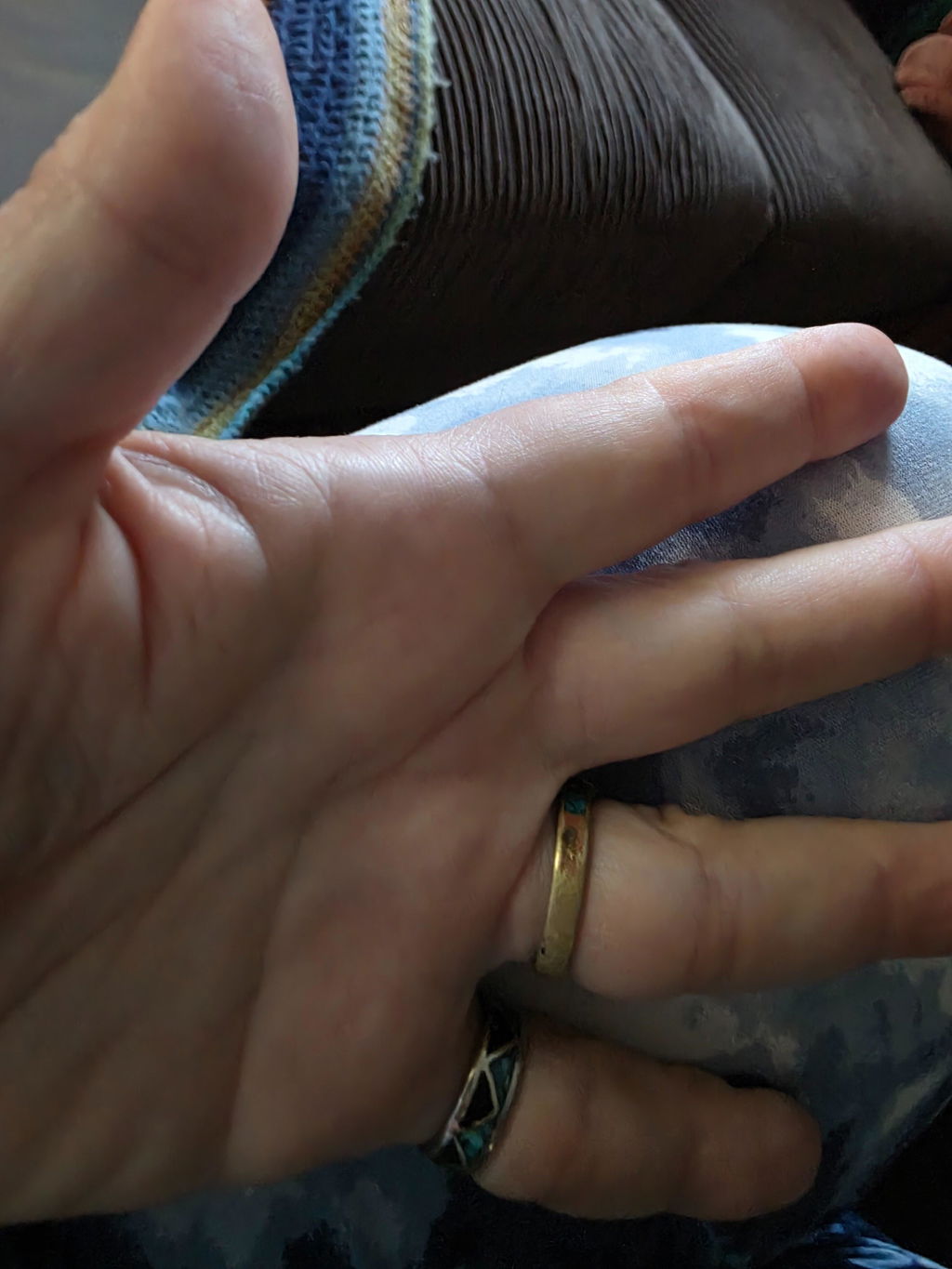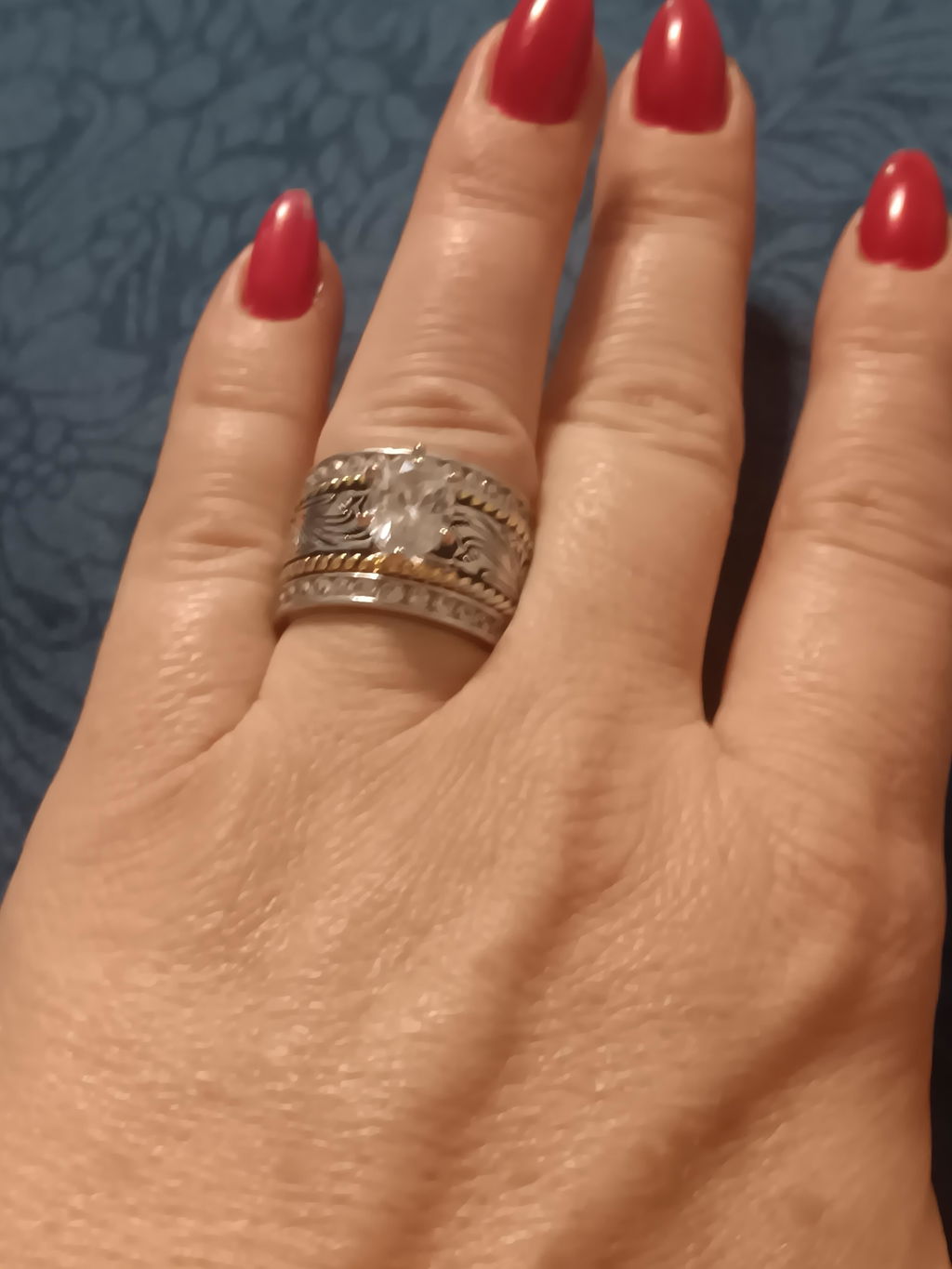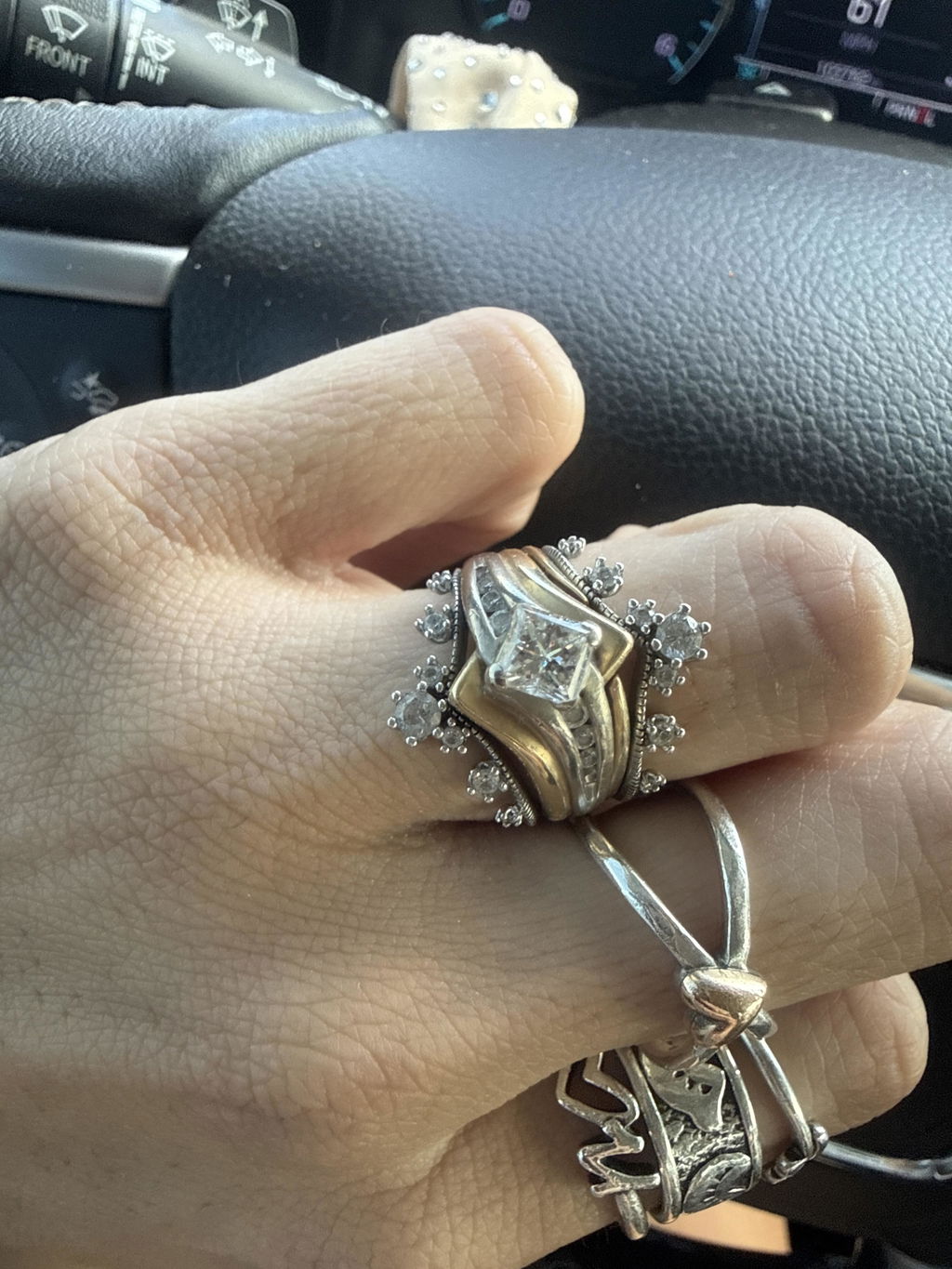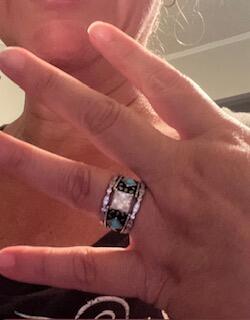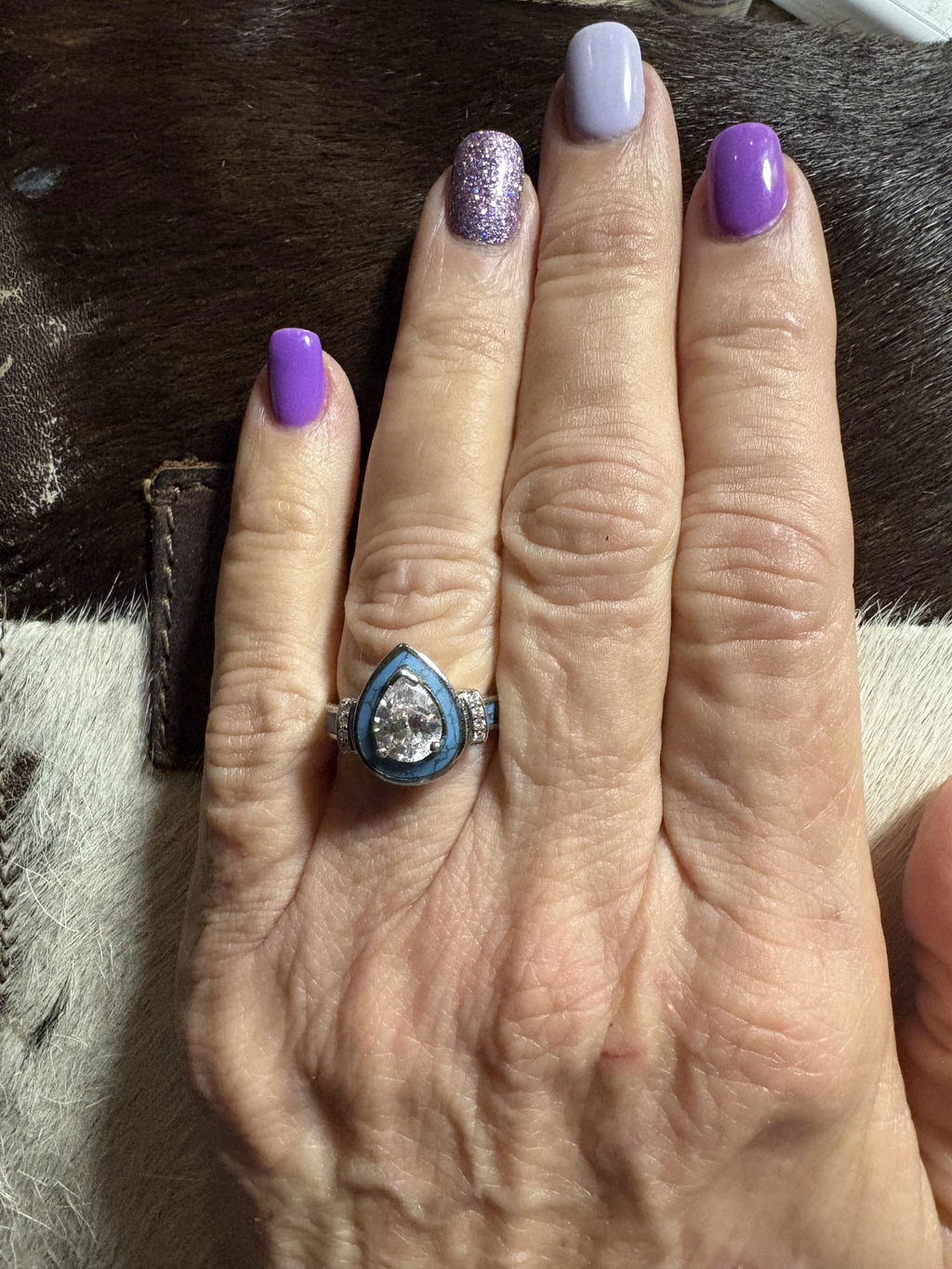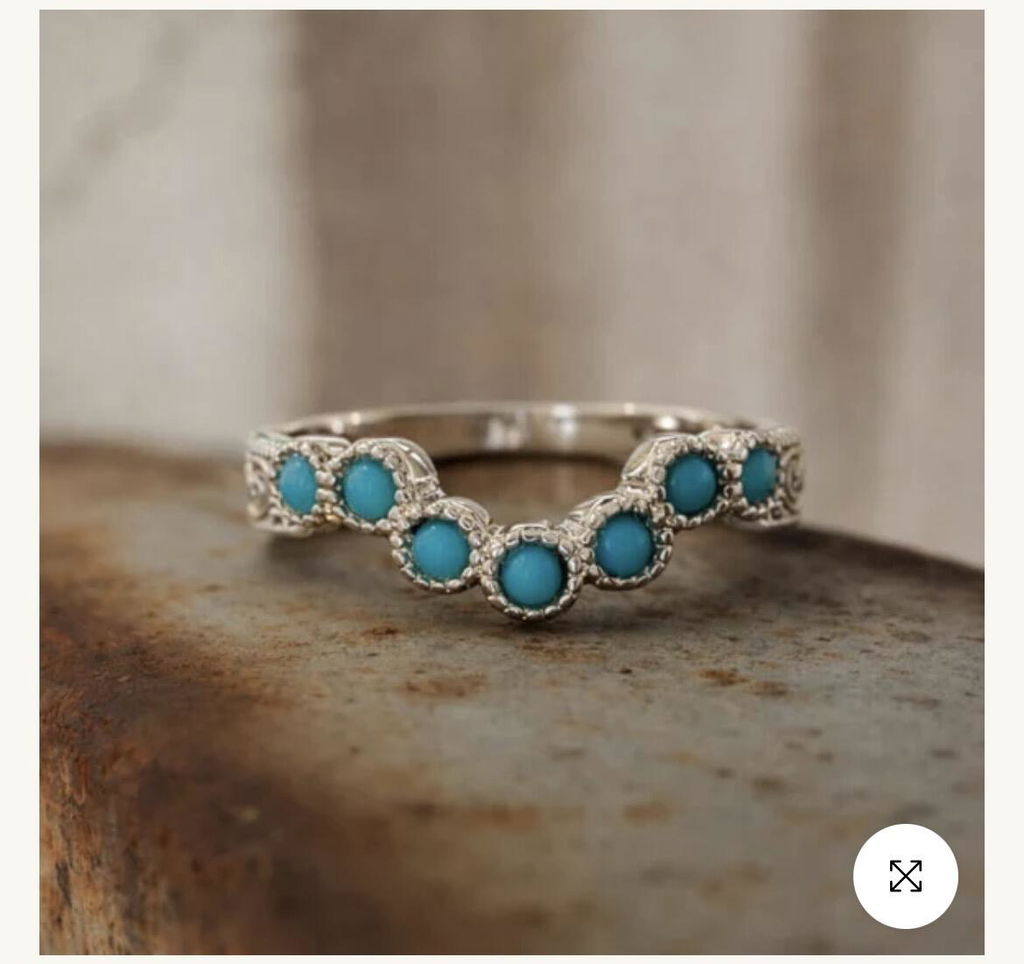
You have found a wedding band you like, but the photograph leaves you wondering: will it actually sit beside your engagement ring? A matching metal color, a similar stone shape or the same ring size cannot answer that question. The useful detail is often hidden in the side view.
A visible gap is not automatically a problem to fix. Some people like two distinct outlines; others want a close, continuous stack. This guide helps you compare the shapes, request the right photographs and choose a combination without relying on a promise of a “perfect fit.”
Why can two rings leave a gap?
The setting that holds the center stone can extend beyond the engagement ring's band. If that structure occupies the space where a straight wedding band would sit, the bands cannot meet closely. Where there is enough clearance beneath the setting, a straight band may sit alongside it.
That is why a top photograph is only part of the picture. Casting House's jewelry design guide illustrates the difference between a setting with room for a straight band and a projecting setting that calls for a differently shaped companion. Check the actual construction rather than choosing by the center stone's name alone.
For turquoise engagement rings, start with the specific design you are considering. Save its link and selected option before comparing bands, so every question refers to the same ring.
Compare the possible arrangements
Think about the look you want before deciding that every space between the rings needs to disappear. These are options to discuss with the seller, not guarantees that any two products will fit together.
| Arrangement | Why you might choose it | What to check |
|---|---|---|
| Straight band beside the center ring | A simple outline that you may also want to wear alone. | Whether the exact setting leaves room for that band's thickness. |
| Curved or contoured band | A shaped outline around the center setting. | Whether this particular curve suits this particular ring; “curved” is not a universal fit. |
| Straight band with a visible gap | Two separate outlines, if you prefer that appearance. | How the rings sit and move together during a fitting, rather than only in a posed photograph. |
| Rings worn separately | The option to enjoy each design without building a single stack. | The intended finger and size for each ring. |
Curved bands vary in shape and dimensions. Brilliant Earth's explanation of curved wedding bands also emphasizes matching the curve to the engagement ring's profile. Treat a category label as a starting point, then compare the individual pieces.
When browsing our individual stacking bands, make a shortlist of two or three designs rather than assuming the first similar-looking band is a confirmed match.
Ask for photographs that answer the fit question
1. A side view of the center ring
Ask to see the area underneath and beside the main setting. An angled photograph can be attractive while hiding the exact space you want to examine. If the listing only shows the ring from above, request a clear side view before drawing a conclusion.
2. The exact two rings together
Ask whether the photographed band is the one you intend to buy. A photograph of a complete set does not demonstrate how an unrelated band will fit. Similarly, a styling photograph may include pieces sold separately. Save the product names or item numbers with the image so you can check the combination later.
3. Each ring on its own
If you expect to wear the wedding band alone on some days, look at it that way too. Decide whether you like its individual shape, where the decorative detail sits and how much of the design you can see. That decision matters even when the paired photograph looks exactly as you hoped.
Photos can help you compare an arrangement, but they do not prove comfort on your hand. Use them to narrow your options and identify the questions a fitting or a seller's measurements still need to answer.
Separate visual matching from physical fit
A rope edge, floral engraving or blue accent can connect two rings visually. Pick one detail you want to repeat and compare it across your shortlist. You do not have to repeat every feature of the center ring in the wedding band.
For example, if the center setting is already elaborate, you might prefer a quieter band. If the center ring is simple, an engraved companion may provide the detail you want. These are styling preferences: neither combination is automatically better made or more comfortable.
Keep two notes for each candidate: “the detail I like” and “the fit evidence I still need.” This small distinction prevents an appealing photograph from answering a practical question it cannot settle.
Check the complete stack on your hand
Try the arrangement you plan to wear, including the number of bands. Open and close your hand normally and notice whether the stack feels comfortable. If you are comparing sizes, ask a jeweler to help assess the whole combination instead of applying an automatic half-size increase.
GIA's guidance on wearing engagement and wedding rings stresses proper sizing and recognizes different wearing arrangements, including separate hands. You can choose a different arrangement if a single stack does not suit you.
For the distinction between band width and ring size, use our wide-band fitting guide. Keep the sizing decision separate from the appearance of a gap: ordering a different ring size does not redesign the setting.
What changes when turquoise is part of the combination?
Keep care instructions with your pairing notes. GIA's turquoise care guide warns against steam and ultrasonic cleaning and notes that heat and certain chemicals can damage or discolor turquoise. Do not apply another ring's cleaning routine to the whole stack without checking every material.
Ask a jeweler to assess unexpected contact with a stone or setting, especially if you notice movement, damage or a change in how the rings sit. Do not bend a band or force two rings together to remove a gap.
Our turquoise cleaning and storage guide covers the separate care routine. Here, the useful buying question is simpler: can you confirm the arrangement and care requirements before ordering the companion ring?
A short message to send before you buy
You can adapt these questions to the two designs on your shortlist:
I am comparing this engagement ring with this wedding band. Can you show the exact two rings together from above and from the side, and confirm whether any other pieces in the photographs are sold separately?
I would like to know whether this combination leaves a visible gap, which dimensions are available for both rings, and whether there are any sizing or exchange restrictions for my selected options. I plan to wear the band on its own as well as beside the center ring.
Add both product links and your selected options. If an answer is still missing, keep that item open on your checklist rather than replacing it with an assumption.
Buying a complete set instead?
Start with the included-piece list in our Western wedding ring sets for women. Confirm which rings are supplied, look at the actual arrangement and decide which pieces you expect to wear together. A three-piece or five-piece label tells you how many rings are offered; it does not tell you how the full stack will feel on your hand.
Your final shortlist should make four things clear: the rings included, the appearance you prefer, the evidence for their fit together and the unanswered questions. Once those are settled, you can choose a close-fitting pair, a deliberately spaced arrangement or separate rings because that is the look you want.