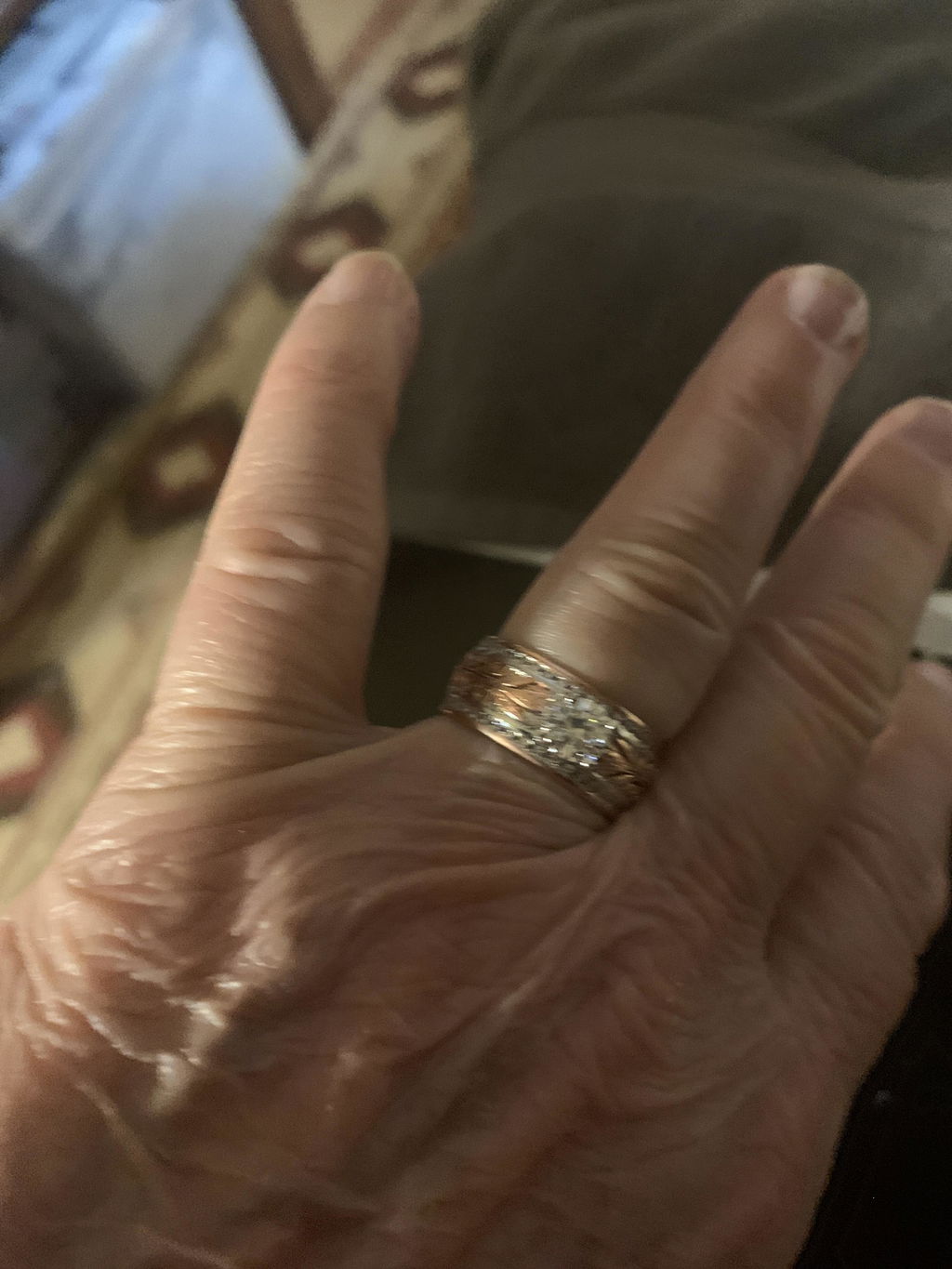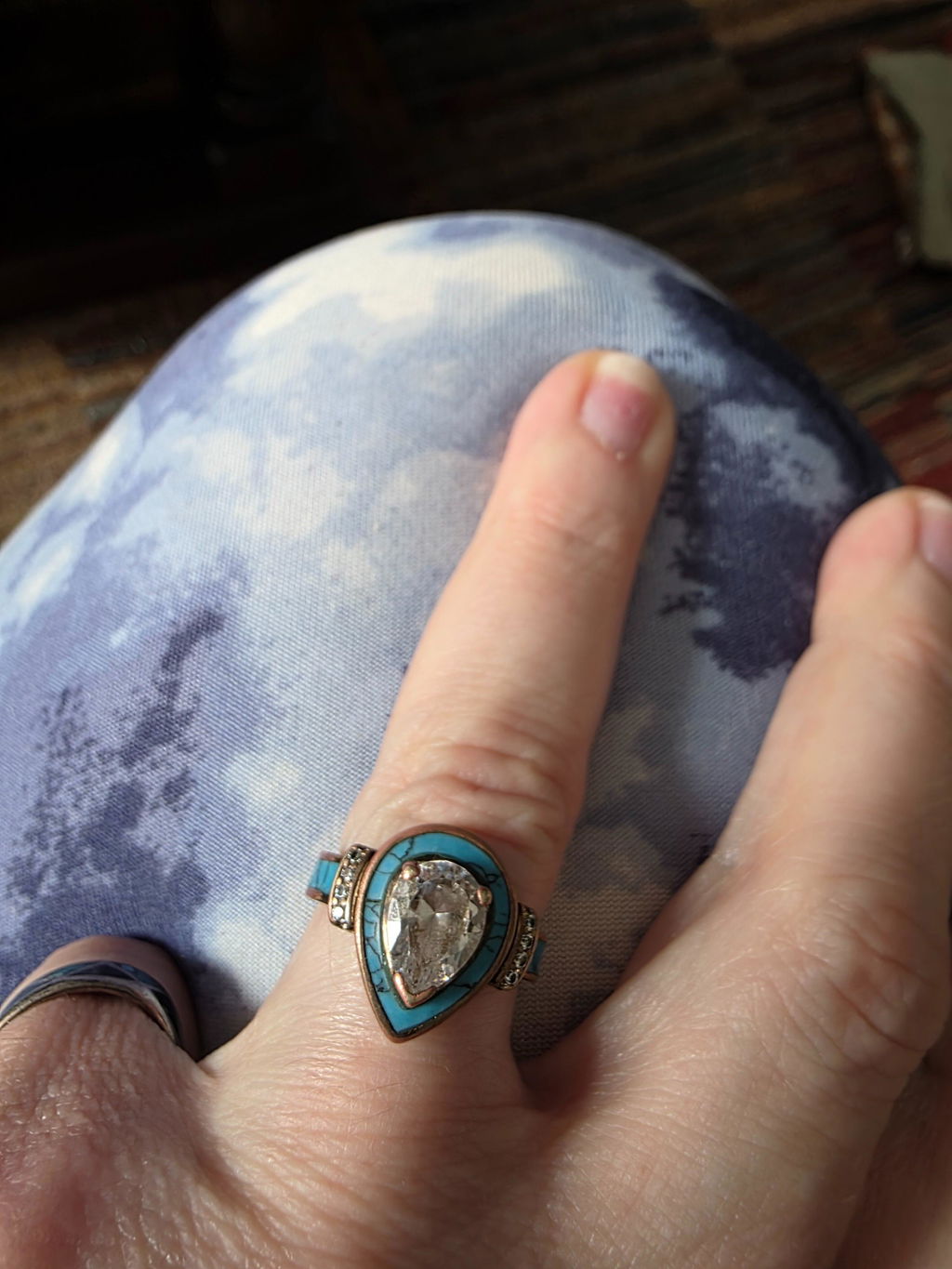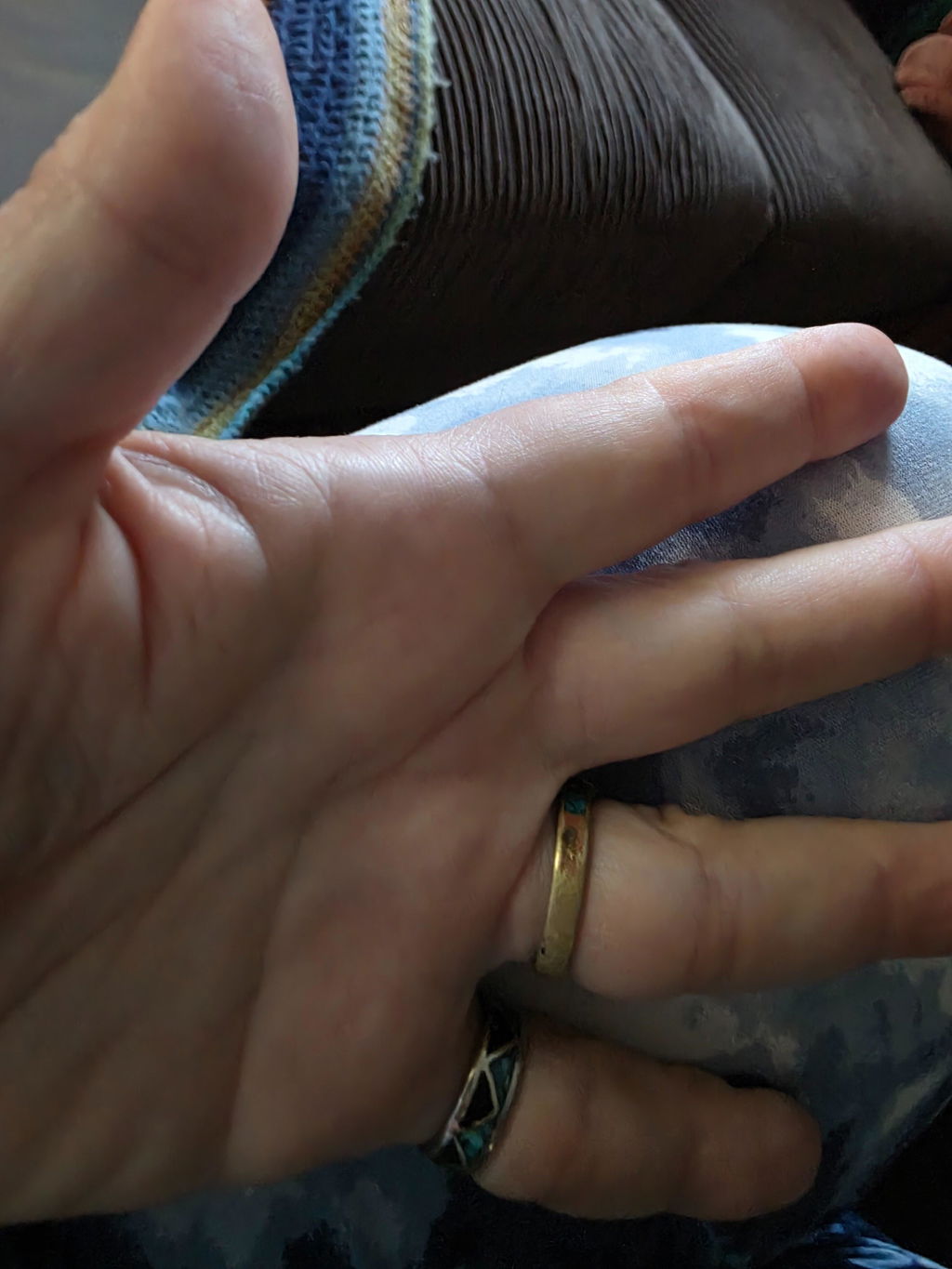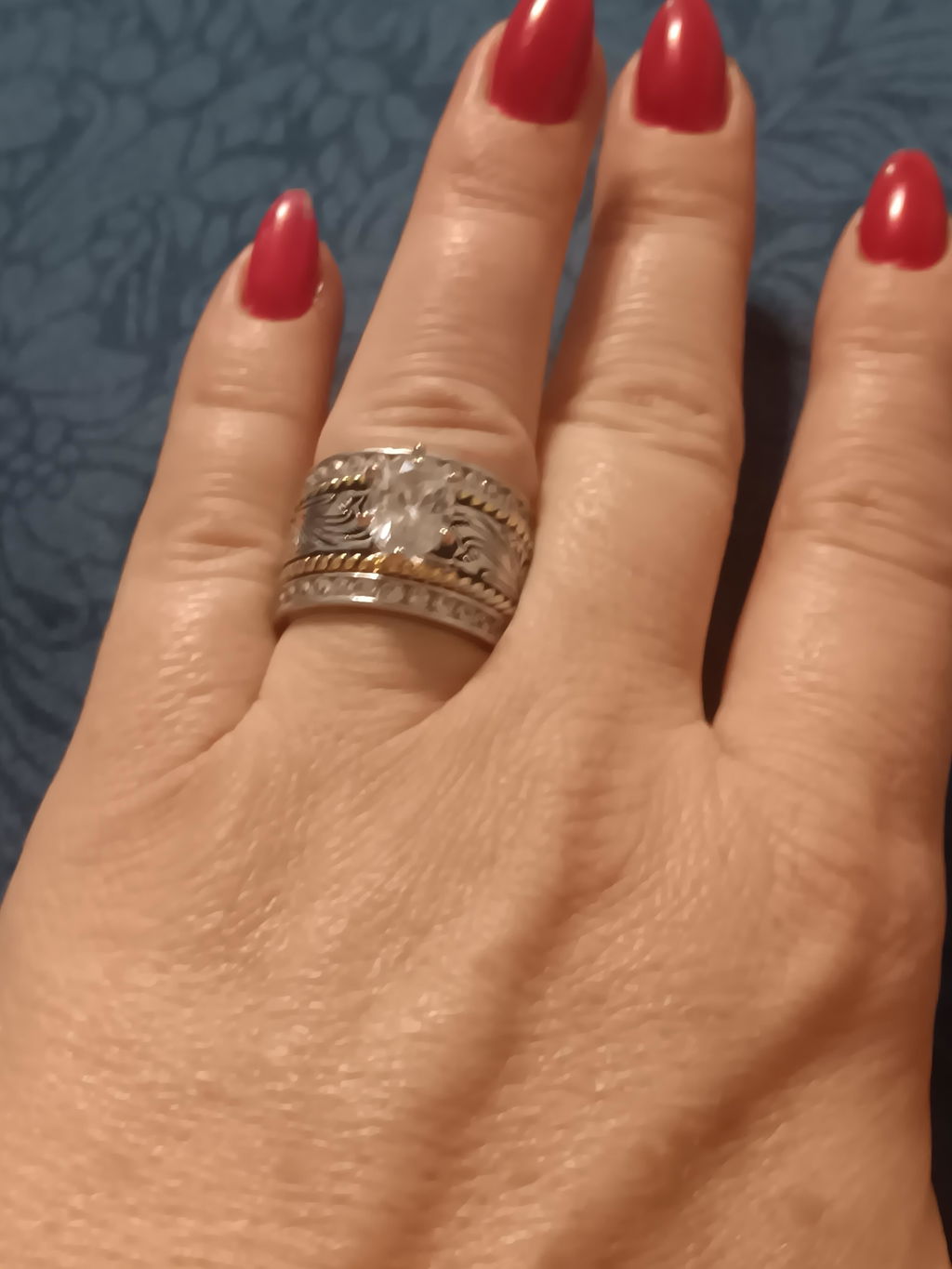

A turquoise ring can be a quiet line of blue against denim or the focal point of an entire outfit. An inlay band carries the color around the finger; a center-stone ring gives it a place of its own. Both belong comfortably in a Western-inspired wardrobe, but they create different looks beside a shirt cuff, a wedding band or a favorite bracelet.
Start with the detail you enjoy most: a clean stripe, a warm wood accent or a generous blue stone. Then think about how you like to wear your jewelry—one ring at a time, a small stack, or a statement piece with everything else kept simple.
Two ways to wear turquoise
An inlay band: color within the ring
Inlay sits within a recessed part of the design. It can form a narrow stripe, several separate sections or a pattern between metal details. The result draws the eye along the band instead of toward one central setting. Some designs use turquoise pieces; others use crushed turquoise or combine it with wood.
A slim band gives blue a subtle role in an outfit. A wider design has more room for contrasting colors and patterns. Black metal can make blue stand out, while a silver-tone edge gives the same color a lighter frame. Wood adds another texture, especially beside denim, suede or a simple knit.
The silhouette also depends on the edges around the inlay. Some designs look almost level from the side; others have raised borders or a rounded band. A side photograph makes that difference much easier to see than a close-up taken straight from above.
A center-stone ring: a distinct focal point
A center-stone design gathers the color into one setting. An elongated stone can follow the length of the finger, while a broad face creates a stronger impression across the hand. Decorative shoulders, a metal border or an open setting can each change the mood of the ring.
This style is especially appealing when you want the ring to carry the outfit. A blue center against a white shirt or dark jacket needs little else around it. If you enjoy several pieces together, repeat one detail—a silver tone, an engraved pattern or a touch of turquoise—rather than making every piece equally prominent.
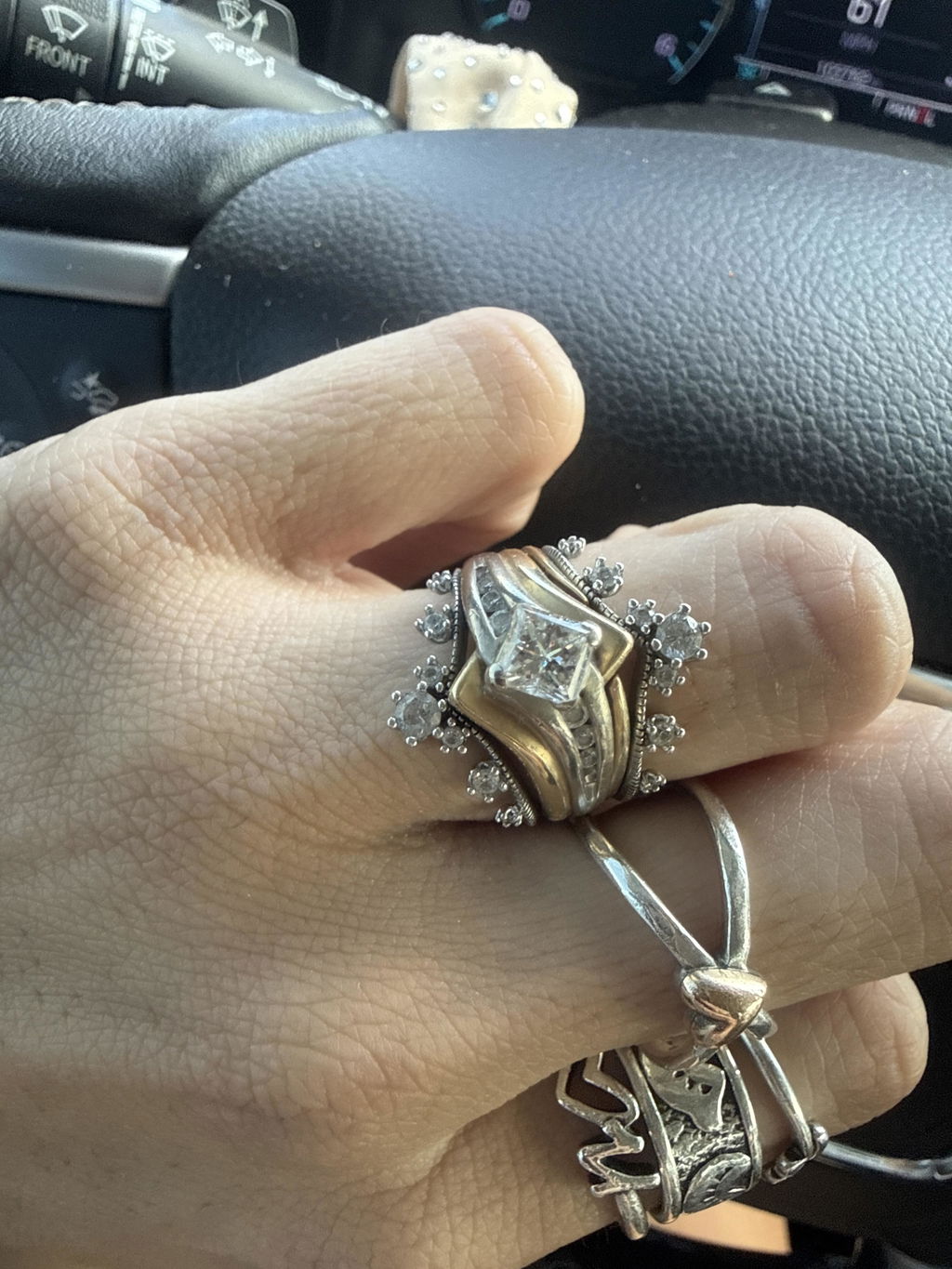
Some bridal designs put a clear stone at the center and turquoise along the sides. That arrangement gives blue a supporting role, with a different effect from a turquoise center stone. Both can work beautifully; the distinction is simply where you want the color to lead.


Find a style for the way you dress
A small accent for everyday outfits
For a restrained touch of blue, the 4mm steel band with crushed turquoise keeps the color in a narrow line. It works as a single accent beside a watch, or as the colored element in a small group of rings. The steel and turquoise combination gives it a simple, casual character.
Try keeping nearby accessories plain when you want the inlay itself to stand out. A smooth metal bracelet or an uncluttered shirt cuff leaves space around the blue. If you prefer a more layered look, repeating the same metal tone can bring different shapes together without making them identical.
A bolder Western look
A raised center and decorated shoulders make a statement ring a natural companion for denim and leather. It can also provide the one detailed element in a quieter outfit. Browse the turquoise ring collection for different balances of blue stone, metal and ornament.
A useful styling choice is to give one feature the most attention. With a large center stone, a plain cuff or simple necklace can be enough. With an elaborate metal pattern, an otherwise neutral outfit lets that pattern remain visible. These are starting points, not rules: the best combination is one you enjoy wearing.
A wedding band with a personal detail
A turquoise stripe can bring color to a familiar band shape. The Western bands and inlay designs include different approaches to that idea, while turquoise engagement ring styles offer more emphasis around the center setting.
For a couple, a shared blue accent can connect two rings with very different silhouettes. One person might prefer a simple band and the other a prominent stone. Matching one color or metal tone leaves room for both preferences. When adding a band beside an existing engagement ring, our wedding-band pairing guide explores straight and shaped bands in more detail.
Look beyond the front photograph
The front view shows the pattern, but the side view reveals how the ring will look beside your hand. Notice the height of a center setting, the curve of the band and the way the inlay meets its metal edges. An on-hand photograph then puts those details back into proportion.
Look at the ring with the rest of an outfit in mind. A dramatic close-up may become a subtle accent at arm's length; a broad stone may remain the first thing you notice. If you already have a ring you love, use its overall presence as a reference. The aim is to find a silhouette you want to wear, whether it is quiet, colorful or deliberately bold.
Why turquoise care is about more than the metal
The science of pores and color
Turquoise contains microscopic spaces that can take up substances from its surroundings. In a 2021 study in Gems & Gemology, Ling Liu and colleagues examined 342 resin-filled specimens. They described how filling pores changes the material's appearance and reduces porosity. That helps explain why two turquoise pieces can respond differently to wear even when their surface colors initially look similar.
A separate study by Emmanuel Fritsch and colleagues found that Zachery treatment reduced porosity and the tendency to absorb discoloring substances such as skin oils. This was a different process from polymer filling. The practical point is that the stone's structure and treatment matter alongside the ring's design; the words “inlay” and “center stone” alone do not establish how it will respond.
A real example of changes during wear
In a 2013 GIA laboratory note, Tara Allen and Amy Cooper described untreated turquoise beads with fingerprint-like discoloration. They suggested that glue or another contaminant from earlier handling could have left the pattern, which became more distinct with time and wear. This was a documented necklace case, not a controlled test of rings or a prediction of how quickly every piece changes.
These findings make the everyday advice easier to understand: keeping creams and cleaning products off the stone is a sensible habit, even when the surrounding metal looks robust. A low inlay and a raised center have different shapes, but both still deserve care suited to their turquoise and other components.
Hardness is only one part of durability
GIA rates turquoise at 5–6 on the Mohs scale, which describes resistance to scratching. That number is not a promise against knocks or chemical changes. GIA also advises against steam and ultrasonic cleaning for turquoise. A machine that suits another piece in your jewelry box may therefore be unsuitable for this one.
Small care habits that fit into a normal day
Good care is easier when it fits around things you already do. Put a small ring dish in a safe place away from the sink, and keep a separate pouch in your bag for the gym. Jewelers of America recommends removing jewelry when applying lotions and warns that rings can be scratched, chipped or caught on exercise equipment.
| Situation | A habit worth changing | A practical alternative |
|---|---|---|
| Getting ready | Applying hand cream with the ring on. | Apply it first, then put the ring on once your hands are dry. |
| Exercise or gardening | Keeping the ring on while gripping equipment or tools. | Put it in a protective pouch before starting. |
| Washing up or household cleaning | Leaving the ring in contact with cleaning products. | Remove it and use a regular storage spot away from the sink. |
| Putting jewelry away | Dropping several pieces together into a drawer. | Give the ring its own soft pouch or compartment. |
These changes reduce avoidable contact and rubbing without a complicated schedule. A ring worn only for an evening out and one worn through a busy day face different surroundings. Let your activities guide the routine: put it away for hands-on tasks and take a look at its condition when you remove it.
For cleaning, follow guidance for the complete piece, especially where turquoise sits beside wood, plating or other materials. Our turquoise cleaning and storage guide covers the practical steps. If an inlay edge lifts or a stone begins to move, set the ring aside for a jeweler to examine rather than trying to polish the problem away.
Choose the blue you will enjoy wearing
A narrow turquoise inlay brings a line of color to a familiar band. A prominent center stone makes blue the focus. One may suit your everyday clothes and the other your favorite occasion outfit, or you may simply have a clear preference for one shape. Choose the design that feels like your style, then give it a place in both your wardrobe and your care routine.
Written by the Retro Turquoise Editorial Team. Research cited above concerns turquoise materials and a documented laboratory case; the everyday routines are care suggestions, not results from a long-term customer trial.